What is CAOS?

CAOS (Center for Gravitational Wave Applications and Seismology) is the international laboratory for the improvement of seismic attenuation systems and the minimization of thermal noise down to the lowest frequencies.

Established as part of the development of gravitational wave detectors and founded by the University of Perugia and INFN, it is one of the primary infrastructures of ETIC (Einstein Telescope Infrastructure Consortium), the project coordinated by INFN and funded under the PNRR (Mission 4 – Education and Research).

Among the main impacts of CAOS is the development of innovative suspension prototypes for current and future gravitational wave detectors, such as Virgo and Einstein Telescope.

To measure gravitational waves, second-generation detectors — LIGO Hanford, LIGO Livingston, Virgo, and KAGRA — suppress ground vibrations by more than 10 orders of magnitude for all frequencies above 10 Hz, using chains of mechanical filters housed in Ultra-High Vacuum towers.

Einstein Telescope, the third-generation detector, will require chains up to 12 meters long in 15-meter towers, lowering the lower operating limit from the current 10 Hz down to 3 Hz.

CAOS features two seismic filtering systems, the Superattenuators, in an improved Advanced Virgo version: two 12-meter filter chains in 15-meter Ultra-High Vacuum towers (10-8 mbar), with an innovative suspended load geometry where the test mass is controlled by a reaction mass that is itself suspended. The 22 meters of internal height provide space for testing, assembly, and innovation.


Understanding the context in which the machine operates is the first step toward controlling it. For this reason, the laboratory has been equipped from the start with advanced instrumentation for environmental characterization, also paving the way for new applications outside of gravitational wave science.
In addition, developments in electronics, optics, and control strategies have already begun to address one of the project’s most ambitious challenges: measuring the residual motion of the suspended mirrors, which are over 10 billion times steadier than the laboratory floor.

Virgo
Interferometro Virgo

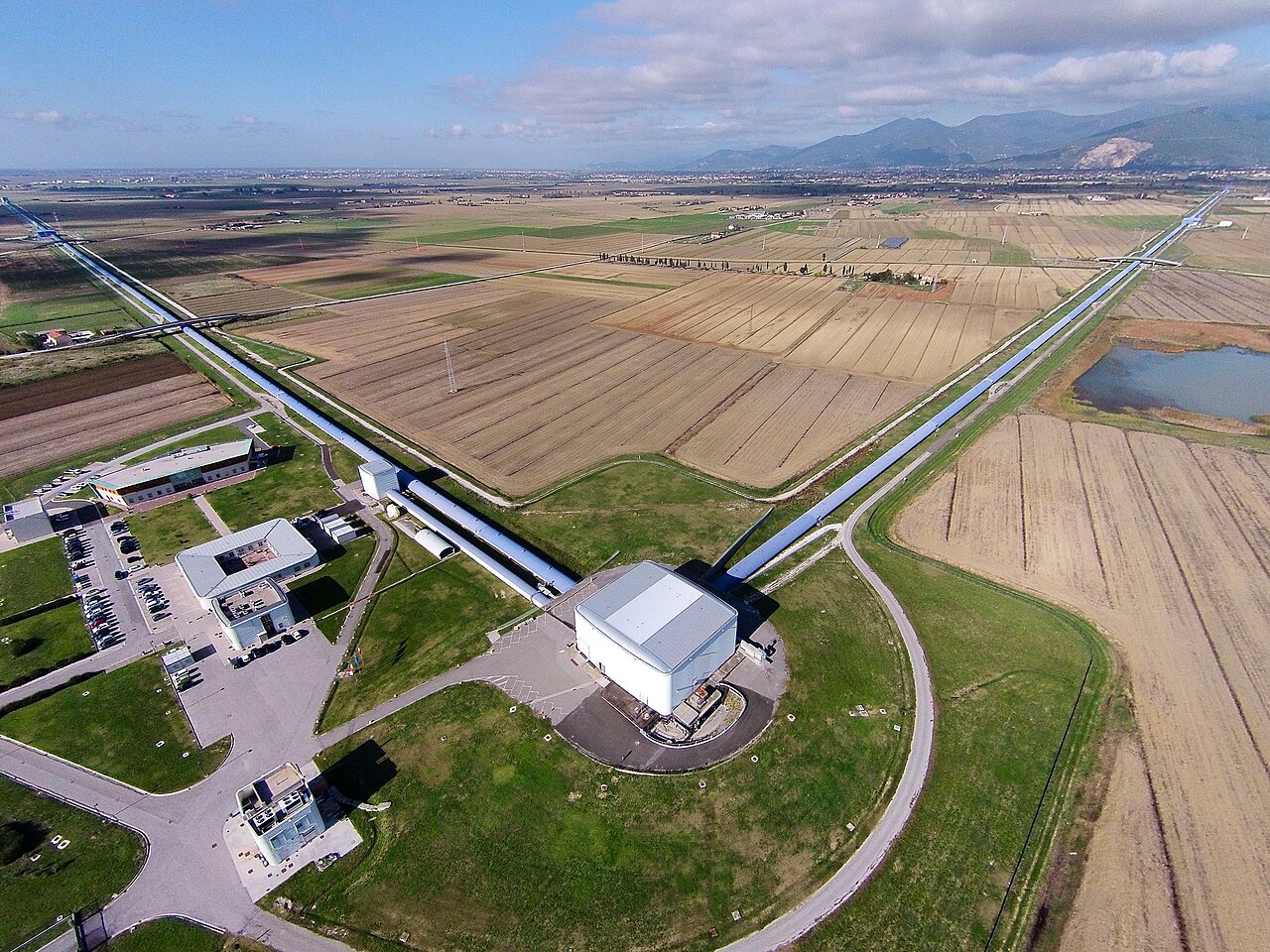
Virgo is the European gravitational wave detector, an interferometer with 3 km arms arranged perpendicularly in the Cascina plain, near Pisa. It has always participated in the analysis of data collected by the global network and has been active in detection since 2017. Since 2015 it has participated in the identification of hundreds of binary black hole coalescences. Its detection played a key role in localizing the historic neutron star coalescence GW170817. Virgo employs the Superattenuators conceived in Pisa in the 1990s and developed up to the version installed in CAOS.
Visit the Virgo website.

KAGRA
KAGRA

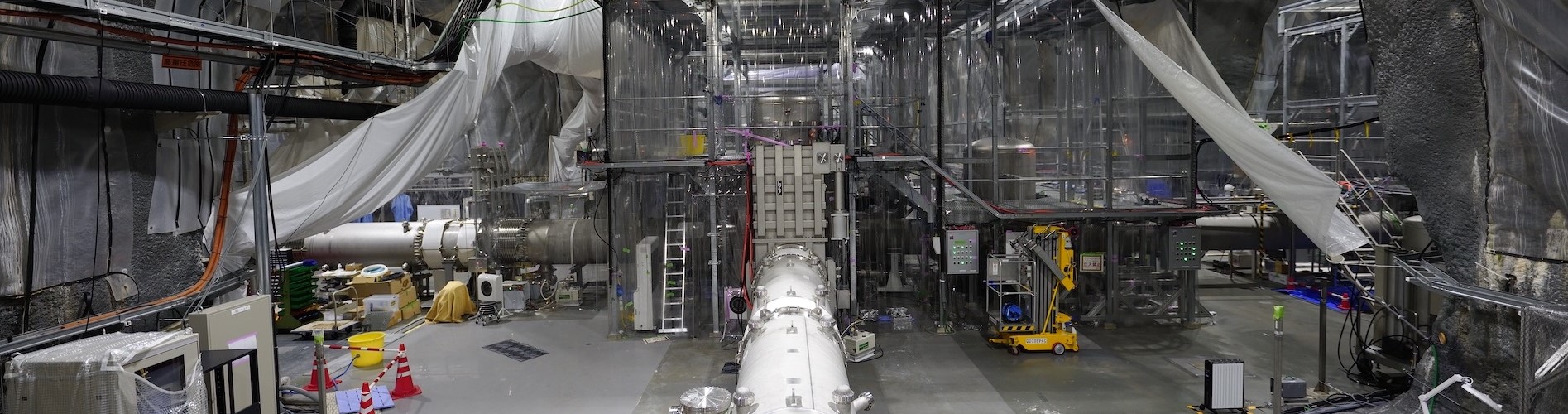
KAGRA (Kamioka Gravitational wave detector) is the gravitational wave detector, featuring three-kilometer arms, built inside Mount Kamioka in Japan. KAGRA introduces two fundamental elements of next-generation detectors: underground placement and cooling of test masses, improving isolation from seismic and thermal noise. The KAGRA scientific community collaborates with LIGO and Virgo in discovering gravitational signals hidden in detector data.
Visit the KAGRA website.

Einstein Telescope
Einstein Telescope

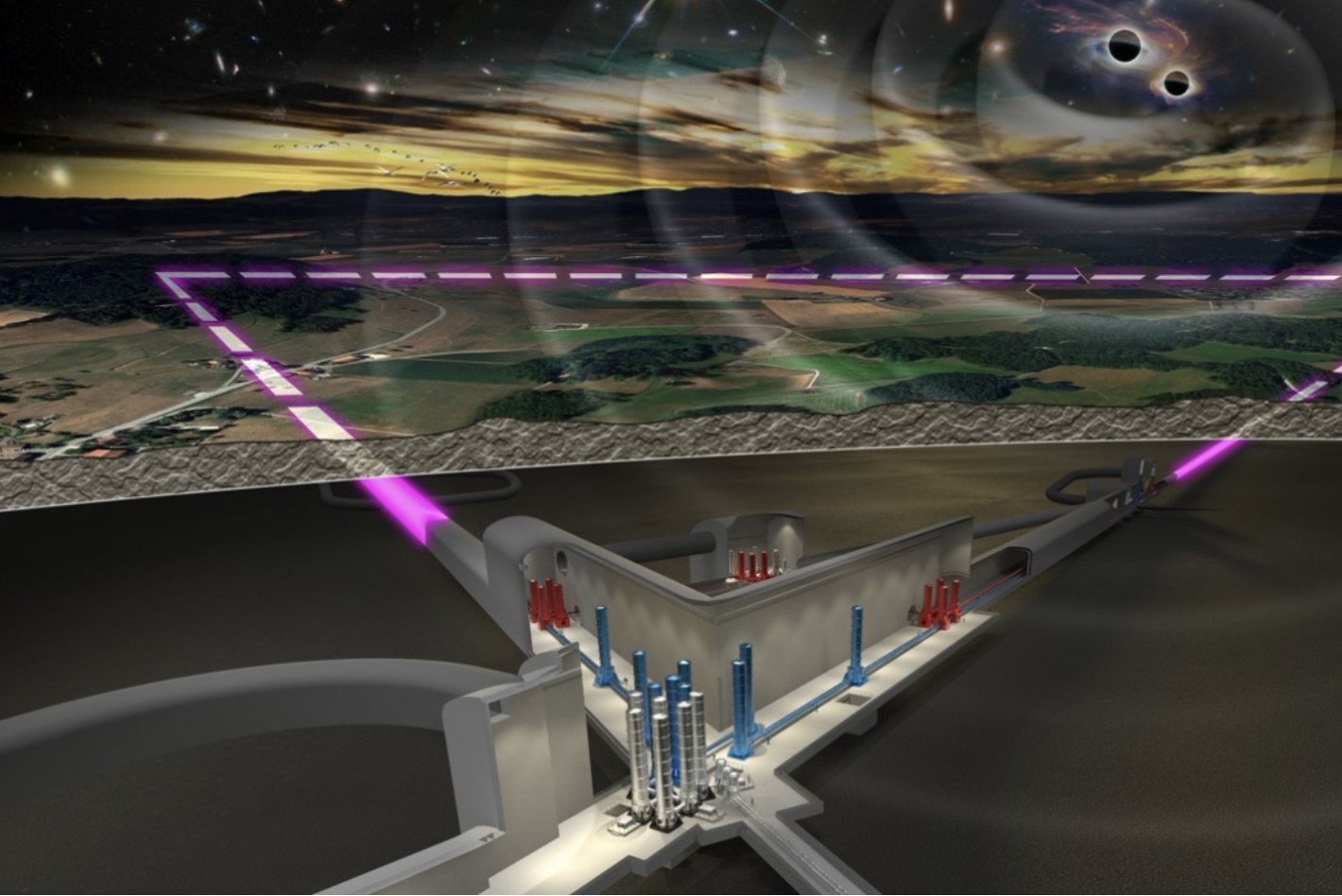
Einstein Telescope (ET) is the European project for the third-generation gravitational wave detector. By increasing sensitivity and frequency bandwidth, ET aims to detect signals from the origin of the universe in quantities never managed before. ET builds on the experience of second-generation interferometers such as Virgo, LIGO and KAGRA, will be installed underground, will have arms between ten and fifteen kilometers and suspended masses at temperatures close to absolute zero. An impressive work designed collaboratively, thanks to the work of over a thousand European researchers and technologists, echoed by other major third-generation projects, such as the American Cosmic Explorer.
Visit the ET website

LIGO Hanford
LIGO Hanford

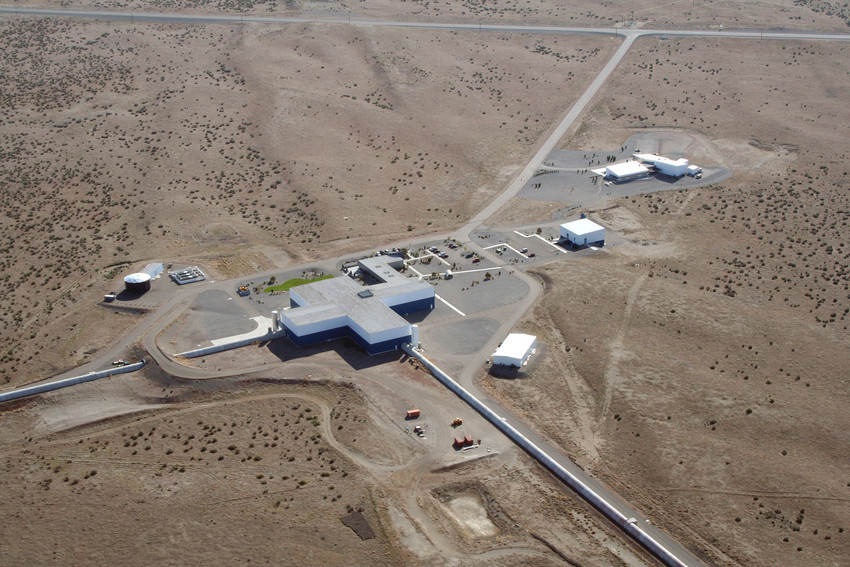
LIGO (Laser Interferometer Gravitational-wave Observatory) is the name of two gravitational wave detectors with four-kilometer arms: LIGO Hanford and LIGO Livingston. LIGO Hanford is in Washington state, in the northwestern USA. It has been detecting gravitational waves since 2015, from the first historic detection GW150914. Since 2007, the scientific communities of LIGO and Virgo have shared data and analysis work to identify gravitational signals. Since 2020, the collaboration also includes the KAGRA community. Like the other detectors, LIGO Hanford employs seismic filters with very high rejection.
Visit the LIGO Hanford website

LIGO Livingston
LIGO Livingston

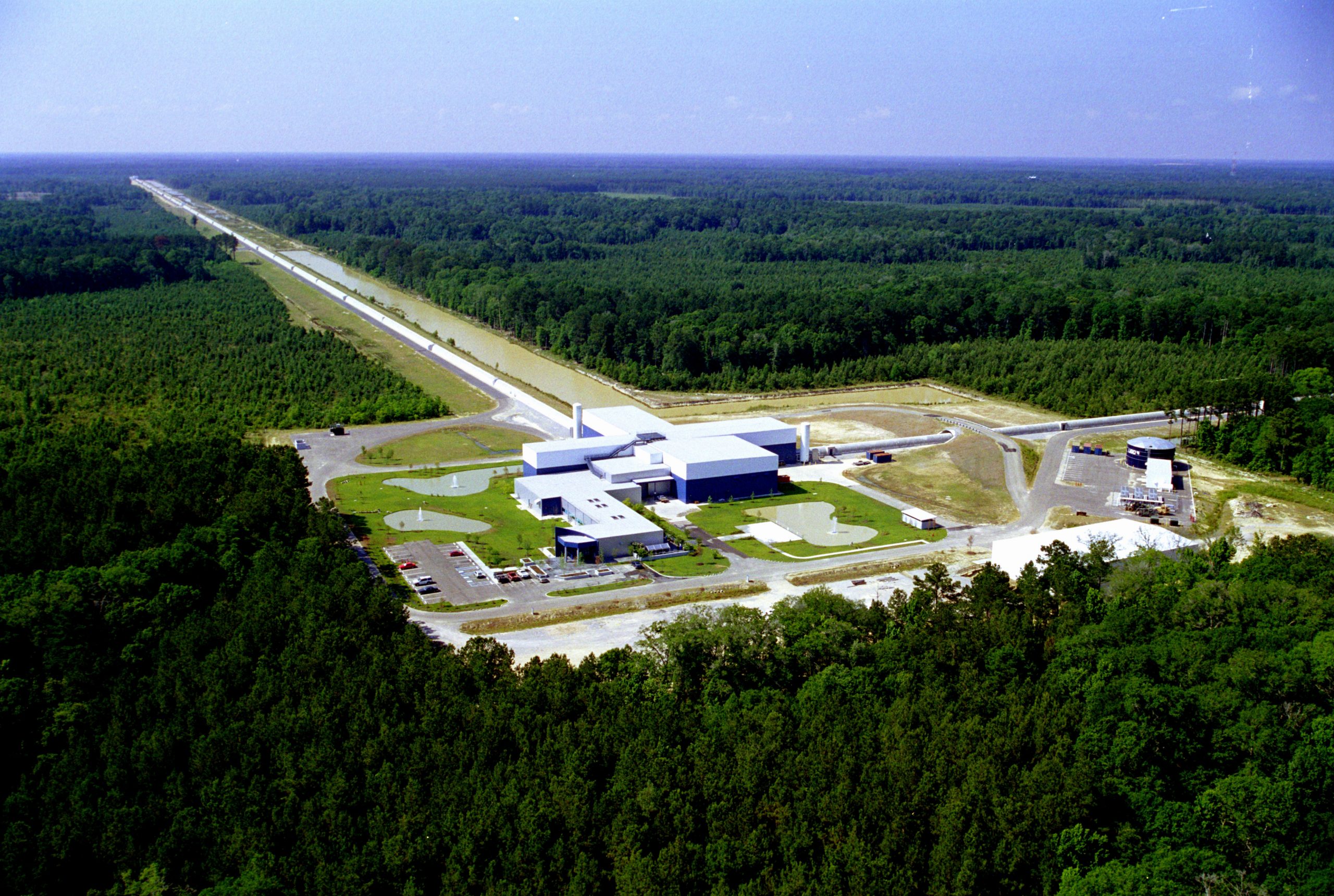
Together with the Hanford detector, LIGO Livingston is part of the Laser Interferometer Gravitational-wave Observatory that detected GW150914, the first historic gravitational wave signal, produced by the coalescence of a binary black hole. It is located in Louisiana (southwestern USA) and like its Hanford twin, has four-kilometer arms. Together with Virgo and KAGRA, the two LIGO detectors establish simultaneous detector operation plans and extract gravitational signals from the data. Seismic isolation is fundamental to the detector's operation.
Visit the LIGO Livingston website.

LIGO-India
LIGO-India

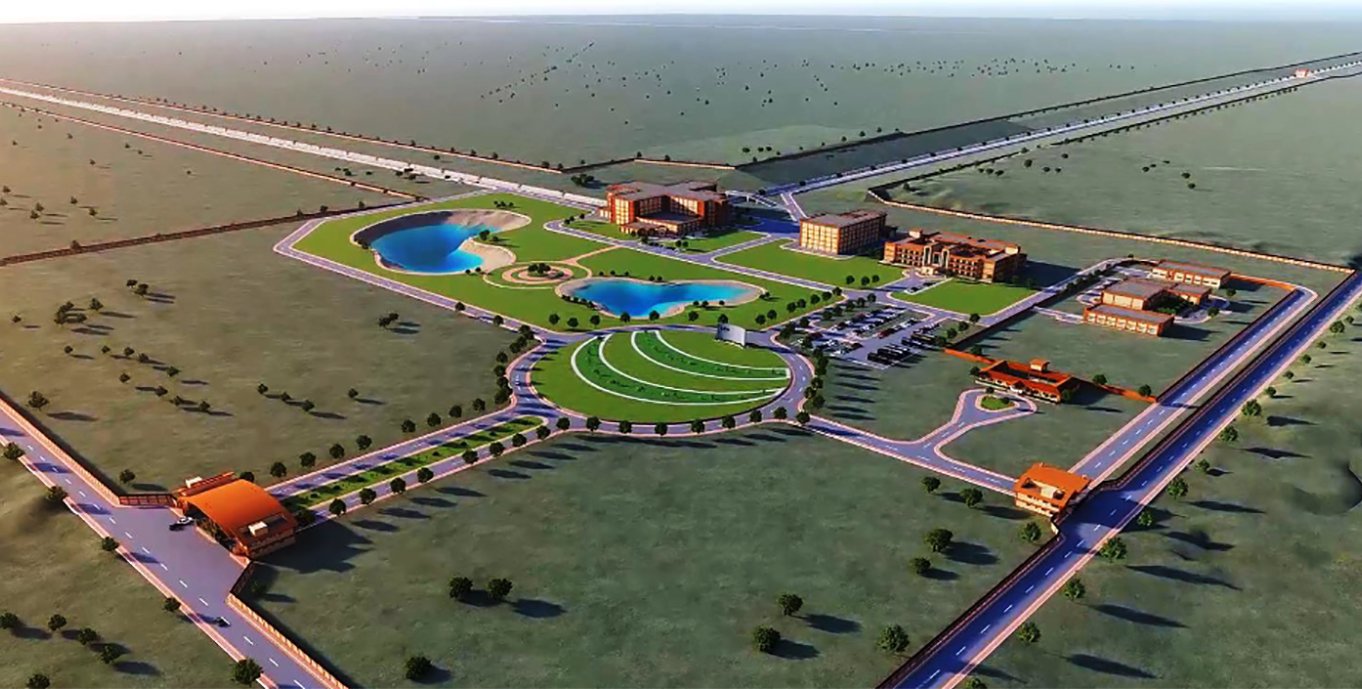
Building on the experience of LIGO, LIGO-India is the gravitational wave detector jointly designed by the scientific communities of India and the USA. Construction officially began on April 23, 2026, in Aundha, Maharashtra, India. Scheduled to be operational by 2030, LIGO-India will join the global LIGO-Virgo-KAGRA network to improve the localization of cosmic sources.
Visit the LIGO-India website