CAOS
Centro Applicazioni Onde gravitazionali e Sismologia

CAOS: the project

CAOS stands for “Center for Gravitational Wave Applications and Seismology”.

From the experience gained with gravitational wave detectors, technologies are emerging that bring seismic isolation to unprecedented levels of performance.
CAOS is the research center created and made available by the Italian scientific community to develop the apparatuses of the future.
From improvements to the Virgo detector, to full-scale prototypes for the Einstein Telescope, to technological dissemination, this is the ideal testing ground for measurements at extreme sensitivity.

Open to international research, partnered with the KAGRA scientific community in Japan, and dedicated to training young technologists in the field.

It begins with two 15-meter Ultra-High Vacuum towers, containing Superattenuators based on Virgo technology at an increased scale, combined to form a six-meter suspended optical cavity.
Impressive? Not too much; there is still plenty of room for future ideas.

May 14, 2026: Inauguration
Foto Tetto CAOS con la Luna

We are pleased to announce the inauguration of CAOS, Thursday, May 14, 2026, from 3:00 PM, at the University Engineering Campus, Via G. Duranti, 93 – 06125 Perugia.
Following speeches by the authorities, it will be possible to visit the laboratory.
Participation is free but registration is required. All details at this link.

Virgo
Interferometro Virgo

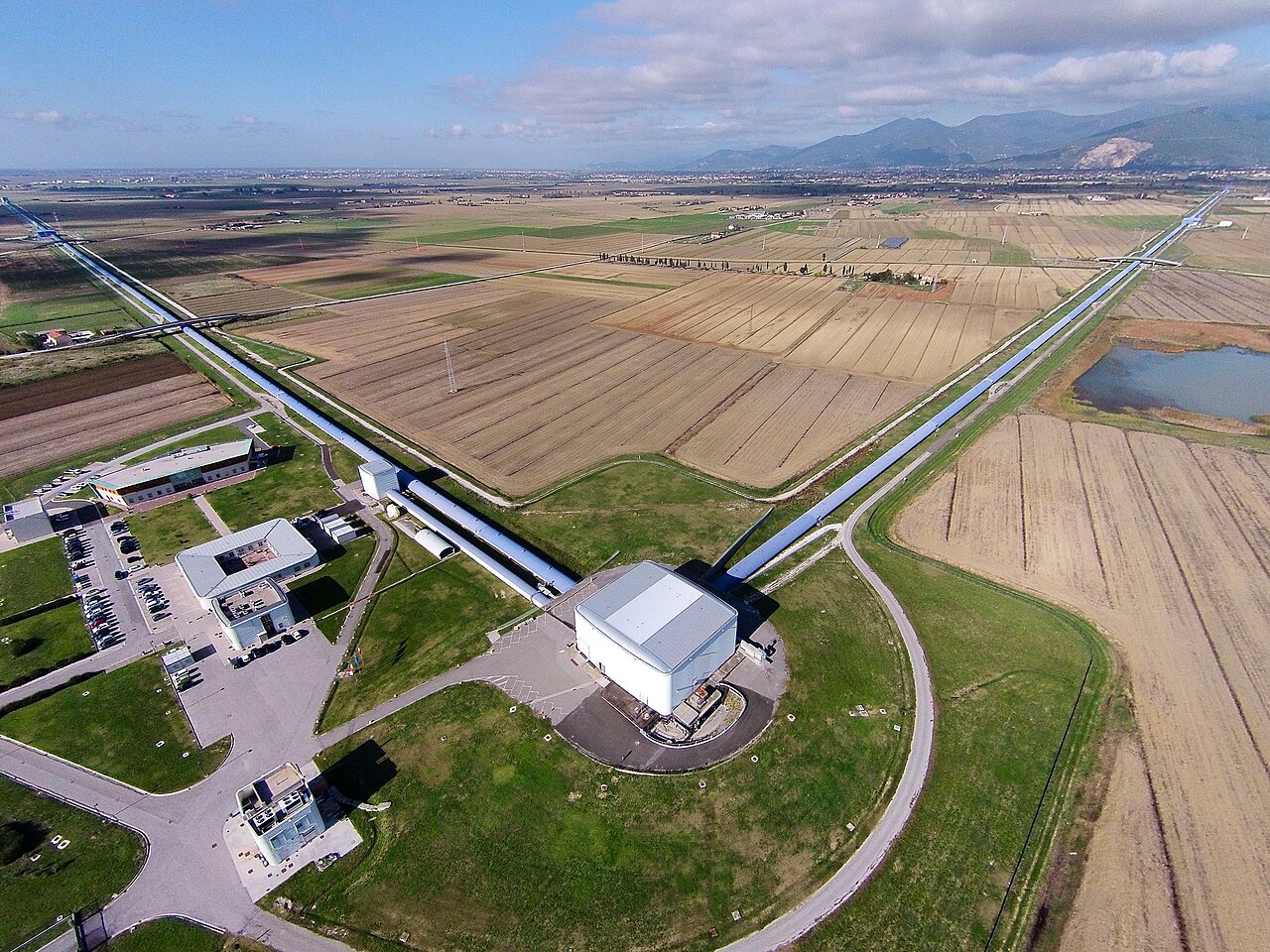
Virgo is the European gravitational wave detector, an interferometer with 3 km arms arranged perpendicularly in the Cascina plain, near Pisa. It has always participated in the analysis of data collected by the global network and has been active in detection since 2017. Since 2015 it has participated in the identification of hundreds of binary black hole coalescences. Its detection played a key role in localizing the historic neutron star coalescence GW170817. Virgo employs the Superattenuators conceived in Pisa in the 1990s and developed up to the version installed in CAOS.
Visit the Virgo website.
KAGRA
KAGRA

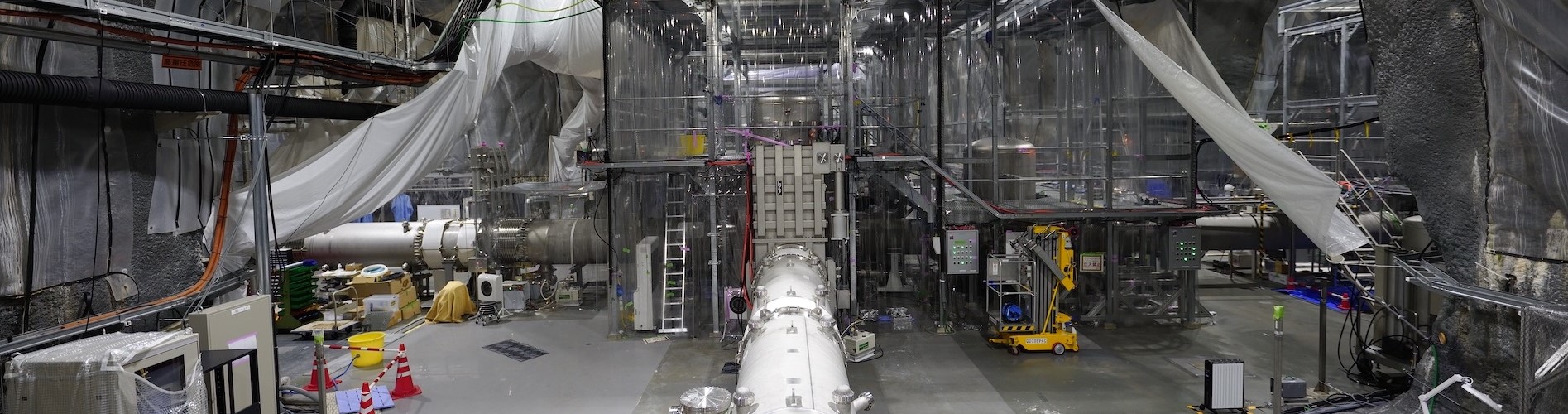
KAGRA (Kamioka Gravitational wave detector) is the gravitational wave detector, featuring three-kilometer arms, built inside Mount Kamioka in Japan. KAGRA introduces two fundamental elements of next-generation detectors: underground placement and cooling of test masses, improving isolation from seismic and thermal noise. The KAGRA scientific community collaborates with LIGO and Virgo in discovering gravitational signals hidden in detector data.
Visit the KAGRA website.

Einstein Telescope
Einstein Telescope

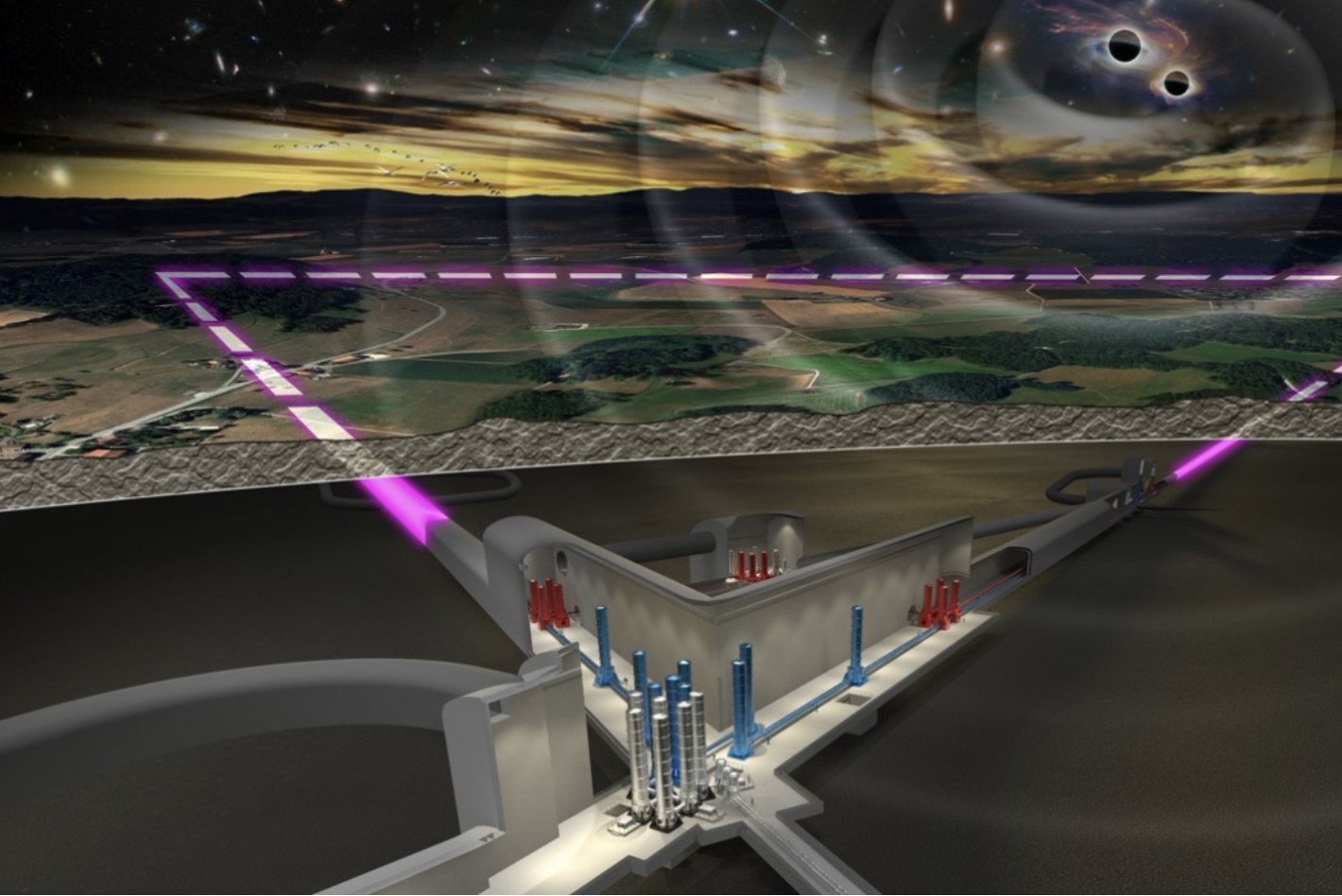
Einstein Telescope (ET) is the European project for the third-generation gravitational wave detector. By increasing sensitivity and frequency bandwidth, ET aims to detect signals from the origin of the universe in quantities never managed before. ET builds on the experience of second-generation interferometers such as Virgo, LIGO and KAGRA, will be installed underground, will have arms between ten and fifteen kilometers and suspended masses at temperatures close to absolute zero. An impressive work designed collaboratively, thanks to the work of over a thousand European researchers and technologists, echoed by other major third-generation projects, such as the American Cosmic Explorer.
Visit the ET website

LIGO Hanford
LIGO Hanford

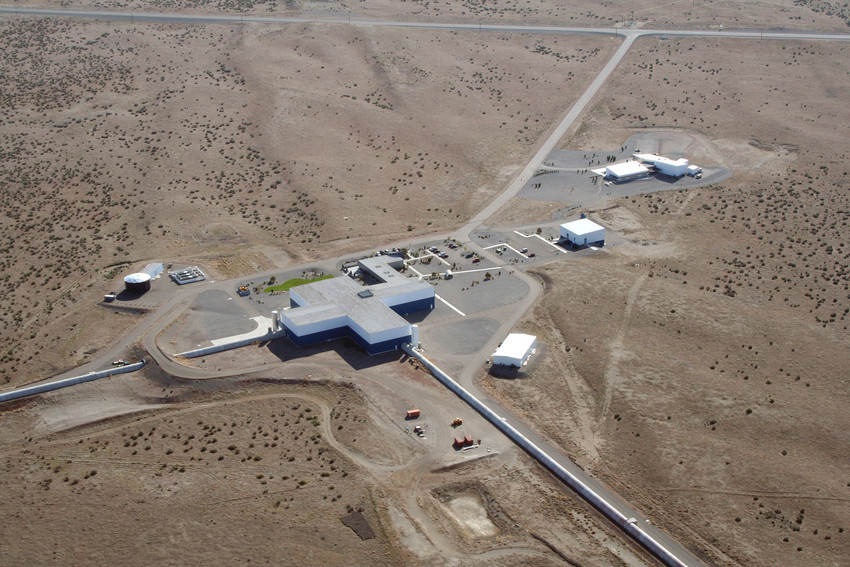
LIGO (Laser Interferometer Gravitational-wave Observatory) is the name of two gravitational wave detectors with four-kilometer arms: LIGO Hanford and LIGO Livingston. LIGO Hanford is in Washington state, in the northwestern USA. It has been detecting gravitational waves since 2015, from the first historic detection GW150914. Since 2007, the scientific communities of LIGO and Virgo have shared data and analysis work to identify gravitational signals. Since 2020, the collaboration also includes the KAGRA community. Like the other detectors, LIGO Hanford employs seismic filters with very high rejection.
Visit the LIGO Hanford website

LIGO Livingston
LIGO Livingston

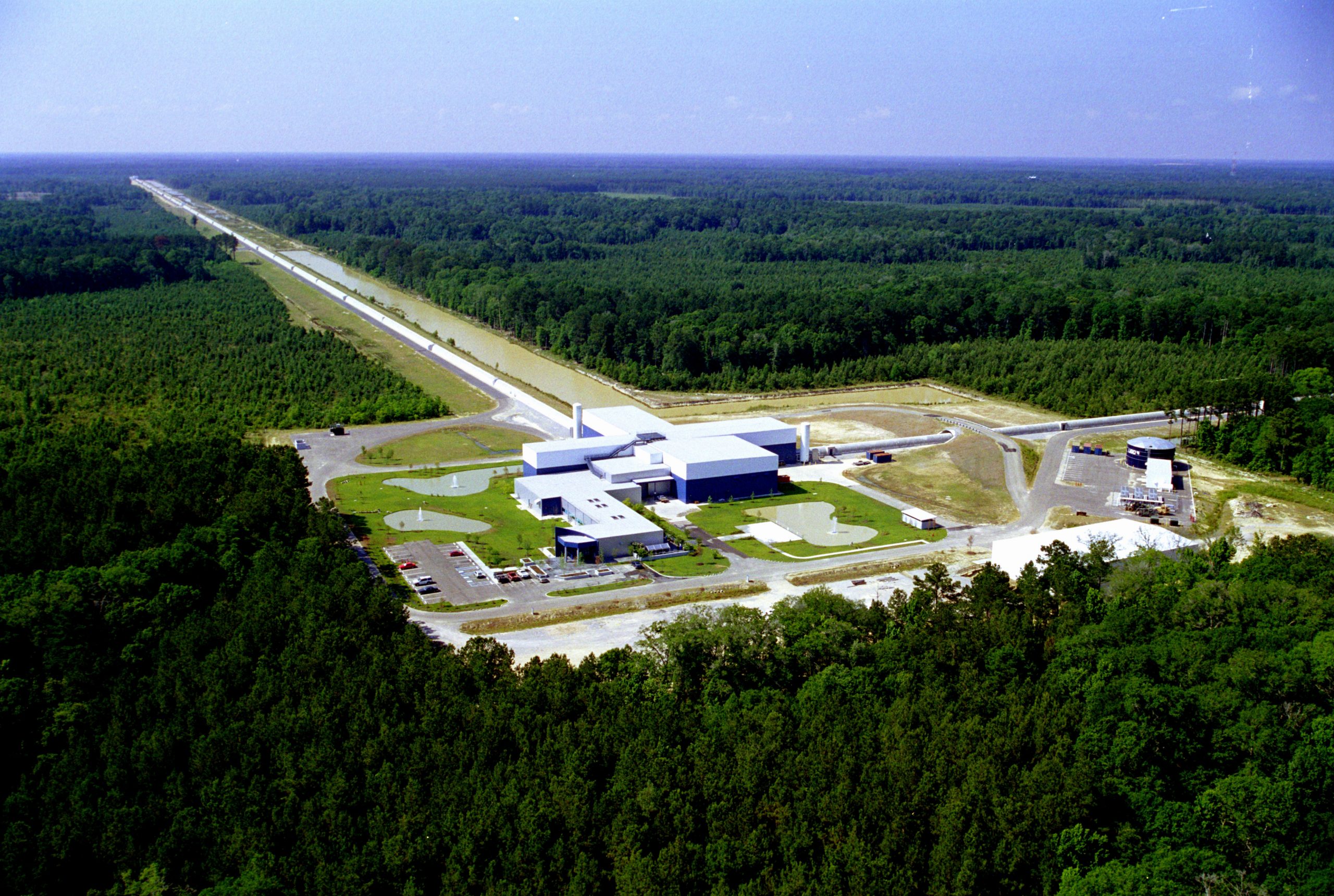
Together with the Hanford detector, LIGO Livingston is part of the Laser Interferometer Gravitational-wave Observatory that detected GW150914, the first historic gravitational wave signal, produced by the coalescence of a binary black hole. It is located in Louisiana (southwestern USA) and like its Hanford twin, has four-kilometer arms. Together with Virgo and KAGRA, the two LIGO detectors establish simultaneous detector operation plans and extract gravitational signals from the data. Seismic isolation is fundamental to the detector's operation.
Visit the LIGO Livingston website.

LIGO-India
LIGO-India

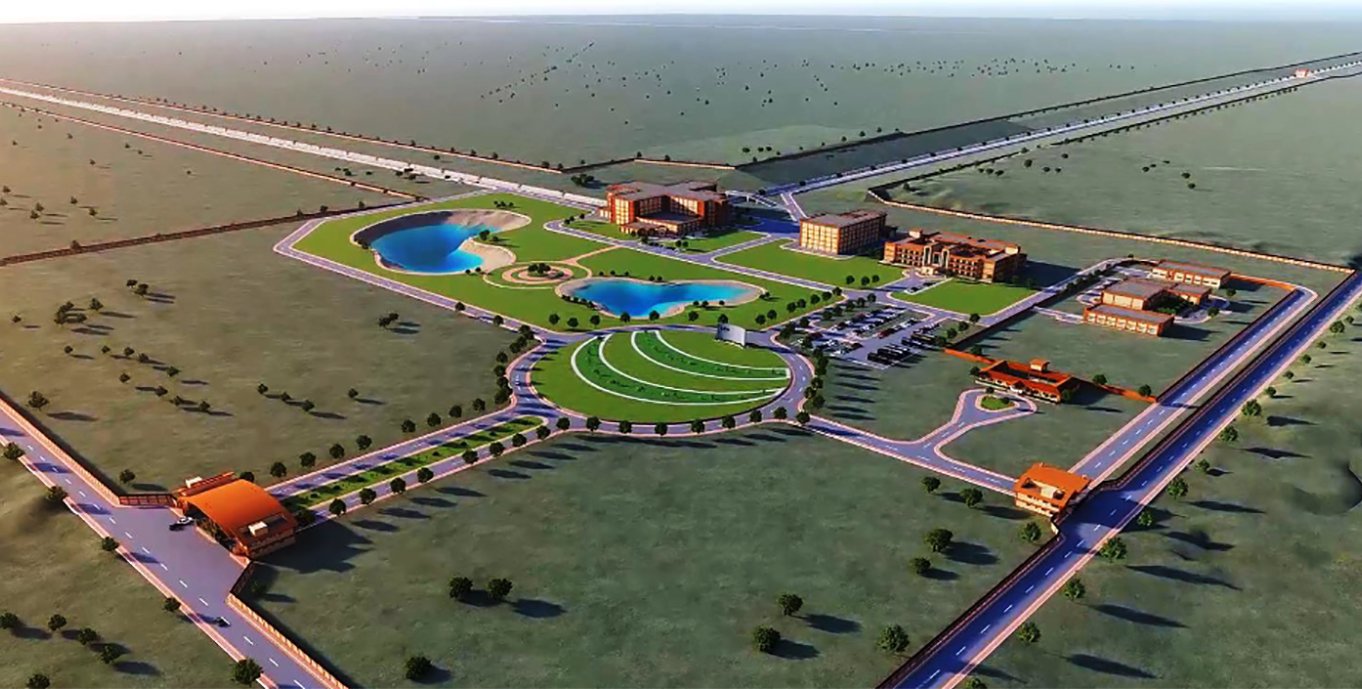
Building on the experience of LIGO, LIGO-India is the gravitational wave detector jointly designed by the scientific communities of India and the USA. Construction officially began on April 23, 2026, in Aundha, Maharashtra, India. Scheduled to be operational by 2030, LIGO-India will join the global LIGO-Virgo-KAGRA network to improve the localization of cosmic sources.
Visit the LIGO-India website

9283 m3

Volume del laboratorio

21.8 m

Altezza della sala

10-17 m

Sensibilità di misura

10-10 atm

Livello di vuoto

10-10

Attenuazione sismica